



Dental implant treatment has changed significantly with the growth of digital dentistry. In 2026, technologies such as 3D imaging, digital scans, computer-guided surgery, CAD/CAM workflows, and artificial intelligence are helping clinicians plan treatment with greater precision and give patients a clearer understanding of what to expect.
For anyone considering dental implants, the technology used by a practice matters because successful treatment depends on careful assessment, accurate planning, and precise placement. If you are looking for a dentist in Andover, understanding these developments can help you ask better questions during your consultation.
What Has Changed in Dental Implant Treatment?
Traditional implant treatment was very dependent on the use of regular X-rays, physical impressions, and manual planning. Clinicians can now integrate in detail information about the teeth, gums, and jawbone prior to treatment using digital workflows.
For patients, it is not only the fact that a clinic is employing “new technology”. It is the ability to combine these technologies with clinical experience to produce an individualized treatment program that gives the value.
1. CBCT 3D Imaging for Better Implant Planning
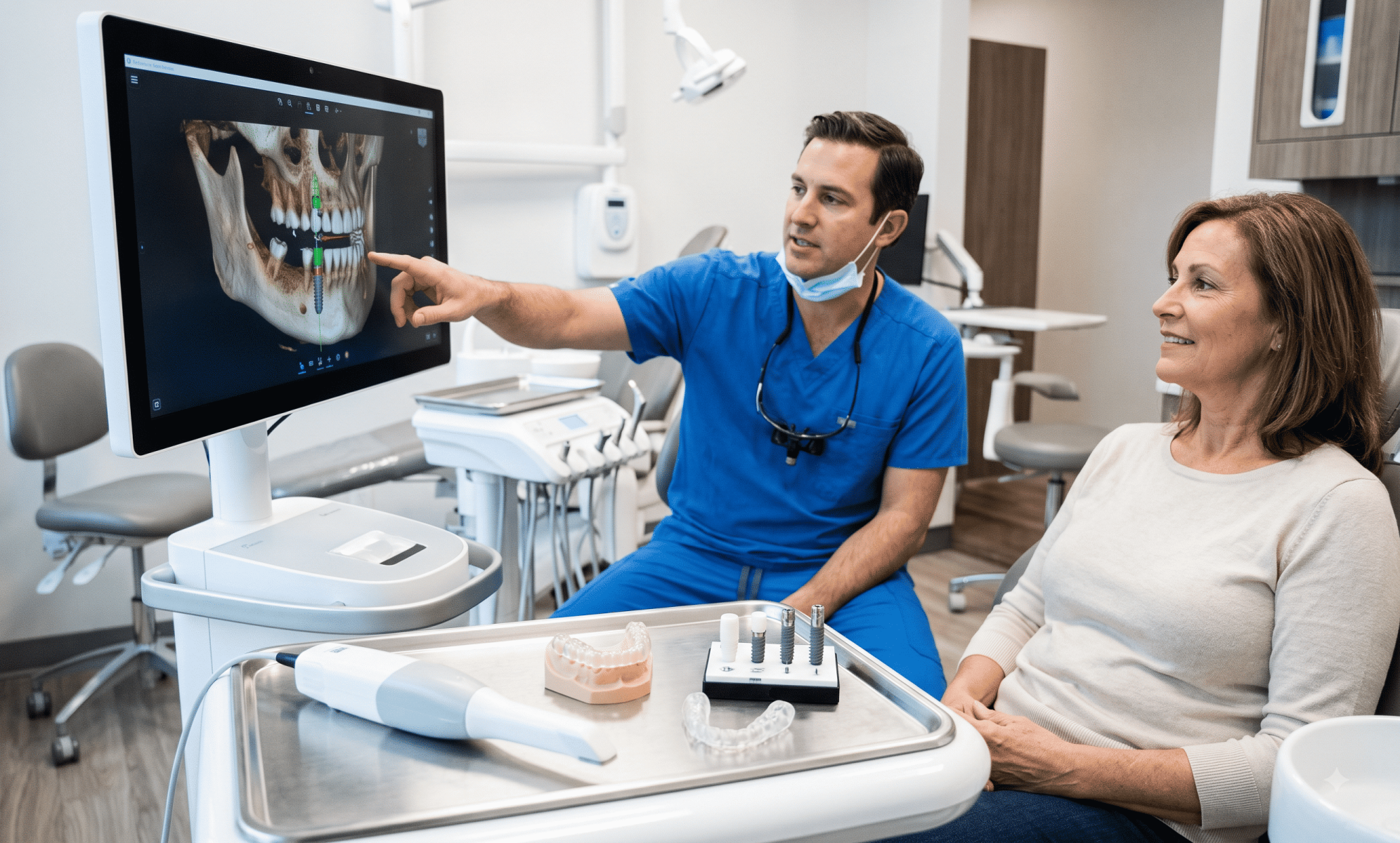
Cone Beam Computed Tomography (CBCT) provides 3-D imaging of the jaw, enabling the doctor to evaluate bone structure and key areas before the implant is placed.
This can assist the dental team to determine the position, angle, and depth of an implant for implant treatment more effectively, given that there is existing bone. It is especially useful when you are having more than one implant or when you are treating an area that must be evaluated for the bone and anatomical structures.
A comprehensive treatment plan is possible in Andover with dental concepts' modern digital dentistry facilities, which incorporate the use of CT scanning.
2. Digital Intraoral Scanning
Intraoral scanners take precise digital impressions of the teeth and surrounding oral tissues without the use of impression materials.
These can be used to form accurate digital models for treatment planning and restorative work. Digital scanning can also play a role in the workflow for designing crowns and other restorations for implant patients and can help to make the impression process more comfortable and cleaner.
3. Guided Implant Surgery
Another key development is computer-guided implant surgery. The position of the implant can be designed digitally prior to surgery, and the position may be planned with a guide to assist the clinician in following the planned position, rather than relying totally on freehand placement.
This method can enhance the accuracy of placing and aid in the planning of anatomical considerations like nerves and sinuses. Instead of only future concepts, digital planning and guided surgery have become part and parcel of today's implantology.
4. CAD/CAM and Digital Restorations
CAD/CAM can be used to digitally design and manufacture dental restorations with a high level of consistency. This can help in the planning and design of customised crowns, bridges, and other restorations that will fit the intended implant placement for implant patients.
It creates a more seamless clinical process from diagnosis, planning of the implant placement to the final restoration as opposed to the diagnosis, planning, implant placement, and final restoration.
5. Artificial Intelligence in Dentistry
The use of AI in dental imaging, diagnostics, and treatment planning is growing in use. By analysing dental images, AI tools can help clinicians identify areas that may be of interest for further investigation.
But AI should be used to complement, not replace, clinical judgement. The dentist is still held accountable for interpreting the results, taking a general health history of the patient, and determining if implant treatment is indicated.
What Do These Technologies Mean for Patients?
The most significant advantage of digital implant dentistry isn't the technology itself. A seamlessly integrated digital workflow can offer:
- More detailed treatment planning
- To enhance visualisation of the jaw and teeth.
- Greater chances of a predictable implant placement.
- More comfortable digital impressions
- Greater communication between the clinic and the dental lab.
- Better knowledge of your suggested therapy
But technology is no substitute for experience. Even after all of this, your dentist will have to evaluate your oral health, your gum condition, the availability of bone and your medical history and treatment goals before recommending implants.
Why Choose Dental Concepts for Dental Implants?
Dental Concepts uses the latest technology with experienced clinical skills and customized treatment plans. The Andover practice is a purpose-built dental practice that utilises CT scanning, 3D intraoral scanning, and has an in-house digital design laboratory. The practice also lists Dr Manish Chitnis as a dental implant specialist as well as a specialist of digital smile design.
For people thinking about Dental Implants in Andover, the mix of digital diagnostics, treatment planning and clinical expertise can help develop a treatment plan that is personalized more than the typical one-of-a-kind approach.
Final Thoughts
2026 is shaping up to be a digital, connected and accurate dental implant year. These tools are revolutionizing implant treatment planning and execution from CBCT imaging to intraoral scanning, from CAD/CAM to novel AI applications.
For those who wish to have implants, consult an experienced Dentist in Andover, who will explain what technologies fit your needs. With the right technology and careful clinical evaluation and customized planning, your implants can be more predictable, comfortable, and educated.
FAQs
Can digital dental implant planning reduce treatment time?
It may help streamline certain stages of treatment, but the overall timeline depends on your individual case, healing, and the procedures required.
Is digital implant dentistry suitable for older patients?
Age alone does not determine suitability. Your overall health, jawbone condition, gum health, and individual treatment needs are more important factors.
Are digitally planned dental implants more expensive?
Not necessarily. Treatment costs depend on the complexity of your case, the number of implants required, and the restoration involved rather than technology alone.