



Straightening your teeth no longer means you have to choose traditional metal braces. Modern orthodontic treatments offer different ways to improve tooth alignment while considering appearance, comfort and everyday convenience. However, with options such as Invisalign, other clear aligners and clear braces available, understanding their differences can make choosing the right treatment easier.
If you are exploring teeth straightening, a Dentist in Southampton can assess your teeth, discuss your concerns and explain which options may suit your needs. The right choice depends on your alignment issues, lifestyle, treatment goals and the level of correction required.
What Is Invisalign?
Invisalign is a series of custom-made, clear plastic trays that step teeth into their desired positions over time. The aligners can be removed to allow you to eat, drink most drinks and clean your teeth without any of the fixed orthodontic appliances interfering.
Most patients require 20-22 hours of aligners per day, with the exception of times when they eat and clean their teeth. Treatment is a process that needs to be consistent; if the trays are not worn for long enough, then progress may be affected.
Invisalign treatment in Southampton is not suitable for all patients, as the treatment depends on the complexity of their orthodontic issues. While not all cases of crowding, spacing and bite irregularities can be corrected with Invisalign, it can be used to correct many.
What Are Clear Aligners?
A Clear Aligner is a clear, removable tray that is used to gradually shift teeth. Other clear aligner systems might utilise a different material, planning approach or treatment strategy. Invisalign is one brand of clear aligner treatment.
The exact treatment experience will vary depending on the aligner system used and the complexity of the treatment. Depending on the system, some may be suitable for more complex alignment issues and others may be able to be used for more serious treatment, if properly planned and supervised by an orthodontist.
Don't just focus on how they look when choosing aligners. The ability to get a professional assessment, treatment planning, follow-up appointments, and the ability to deal with your particular alignment concerns are crucial factors.
What Are Clear Braces?
Clear Braces are an orthodontic device, as opposed to removable aligners, that are held in place by brackets placed on the teeth that are tooth coloured or clear. The brackets are joined by a wire that exerts a controlled pressure to move teeth into more desirable positions.
Since clear braces stay in place during treatment, there is no need for patients to remember to wear removable trays. They can also be appropriate for some complex alignment or bite problems where there is a need for greater orthodontic control.
But fixed braces require special attention to clean around brackets and wires. Avoidance of some foods may be necessary and changes can be uncomfortable while the teeth start to move.
Key Differences Between the Three Options
Each treatment has advantages, and the most suitable option depends on your circumstances.
Appearance: Invisalign and other clear aligners are generally discreet and removable. Clear braces are fixed but use tooth-coloured or transparent components to reduce their visibility.
Convenience: Aligners can be removed for meals and brushing, whereas clear braces remain in place throughout treatment.
Discipline: Removable aligners require consistent daily wear. Fixed braces continue working without needing to be put back in.
Cleaning: Aligners allow normal brushing and flossing when removed. Clear braces require extra attention around brackets and wires.
Treatment suitability: All three options can improve alignment, but the best choice depends on your bite, tooth movement requirements and clinical assessment.
Treatment duration also varies. It depends on the complexity of your case, the appliance used and how closely you follow your dentist's instructions.
Which Teeth Straightening Option Is Right for You?
The decision can be made based on your priorities. If removability and discretion are the most important, then you might want to consider Invisalign or another appropriate aligner system. Clear braces might be better if you want an appliance to stay in place or if you require more complex tooth movement.
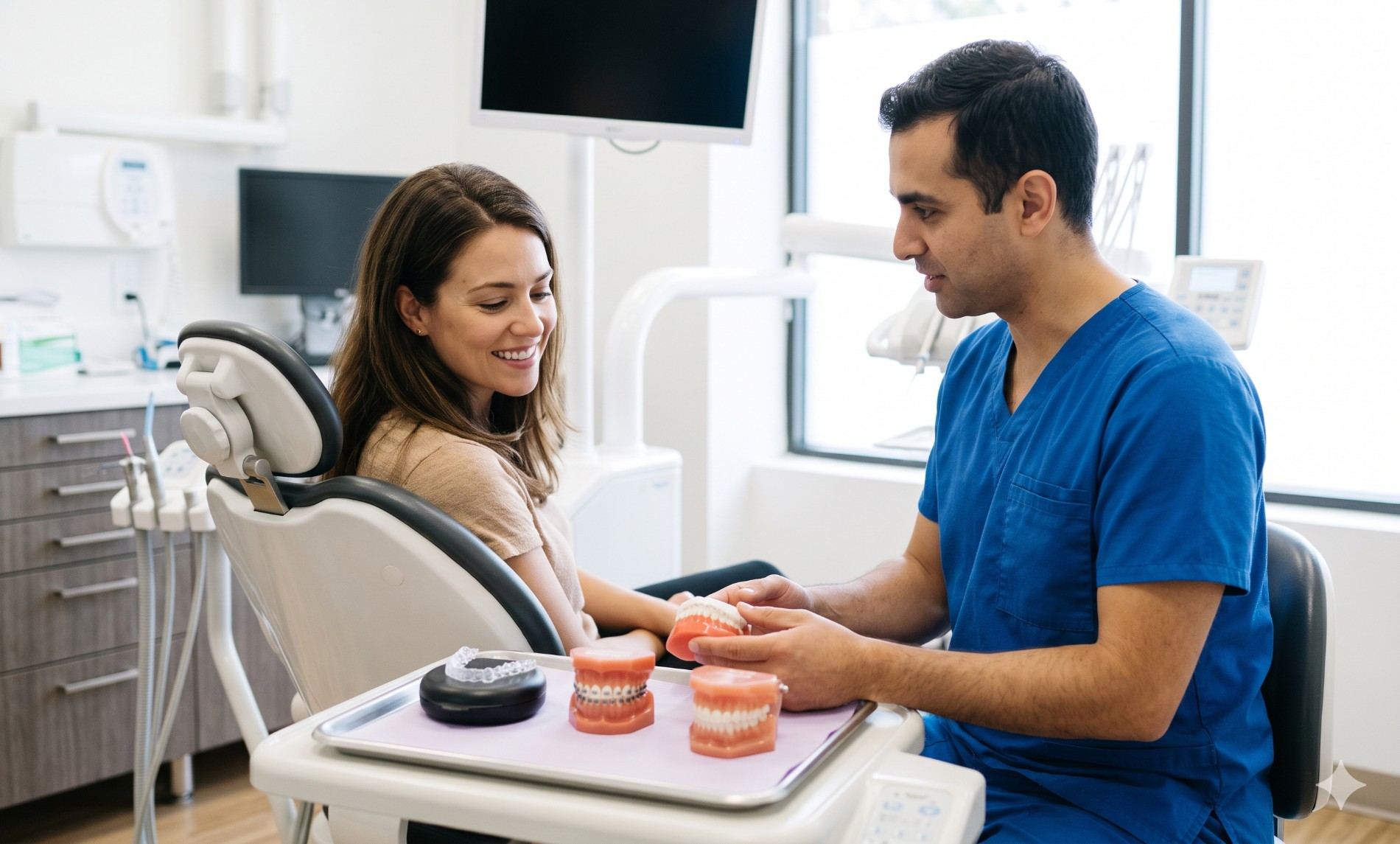
A Dentist in Southampton can evaluate your bite, inspect your teeth and gums and discuss the pros and cons of each option. They can also talk about the cost of treatment, how long it will take and the necessity of retainers following.
Why Is Professional Assessment Important?
There's more to straightening teeth than just making your smile look good. Your dentist should take into account the health of your gums, any previous dental work, the function of your bite and the type of movement needed.
Talk to a personalised consultation to set reasonable expectations and determine the safest route. Regardless of which option you select, your treatment plan and retainers as recommended can help preserve your treatment results.
Final Thoughts
Invisalign, other clear aligners and clear braces offer different approaches to teeth straightening. There is no single option that suits everyone, so the decision should be based on your dental needs, lifestyle and treatment goals.
If you are considering Invisalign in Southampton or comparing alternatives, professional guidance can help you choose an appropriate treatment and work towards a straighter, healthier-looking smile.
FAQs
Can I switch from clear aligners to braces during treatment?
A switch may be possible if your treatment needs change, but your dentist will need to reassess your teeth and create an appropriate treatment plan.
Will teeth straightening affect my speech?
You may notice a slight lisp when starting aligner or brace treatment, but this usually improves as you adjust to the appliance.
Do I need retainers after clear aligner or brace treatment?
Yes, retainers are generally recommended to help prevent your teeth from gradually moving back towards their original positions.